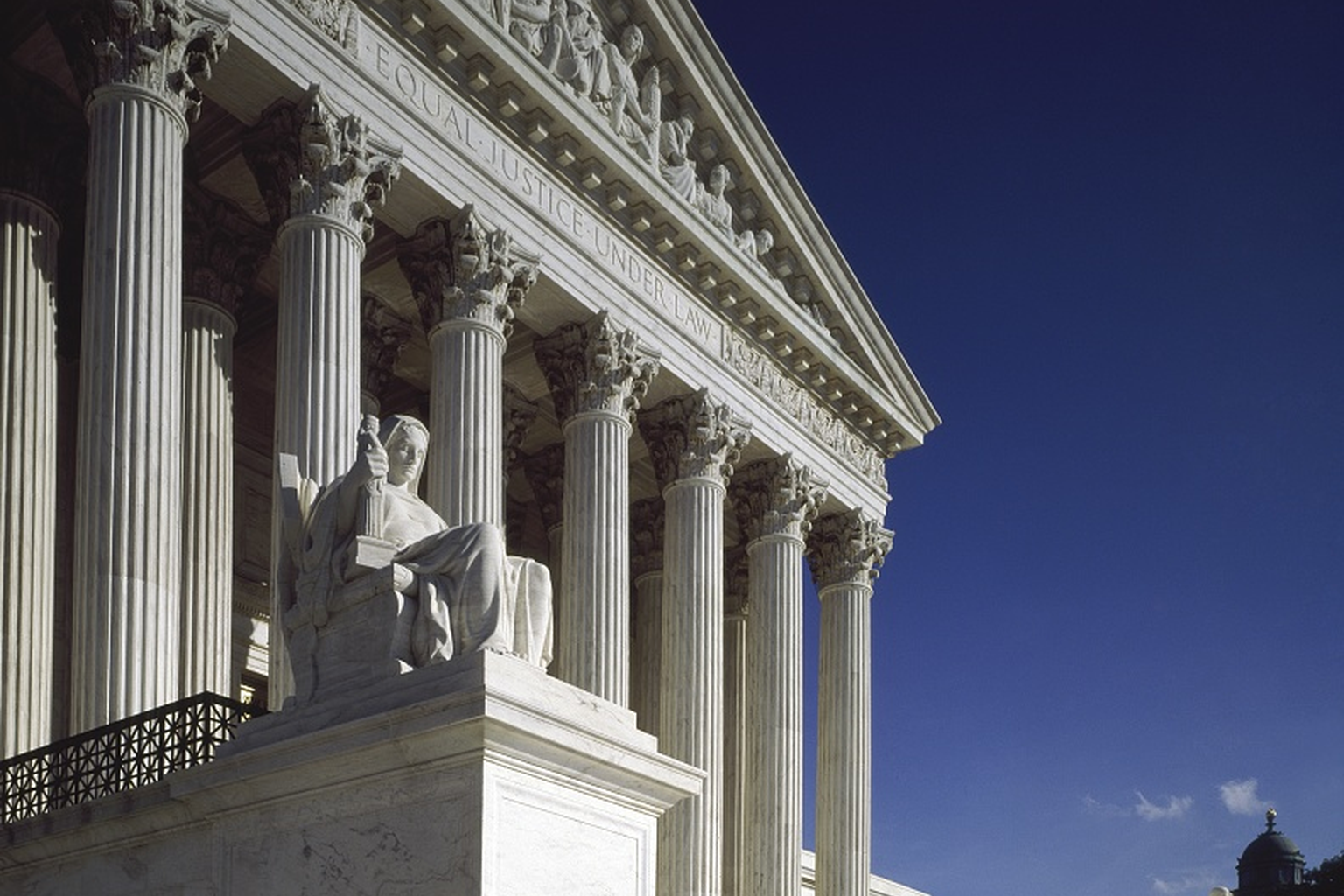
The Supreme Court declined on October 27 to put a lower-court judgment on hold in a dispute over immigration judges' ability to pause certain deportation proceedings. That leaves a restriction in place. It does not supply a Supreme Court explanation of why the restriction is lawful, settle every affected immigrant's case or announce that all previously paused cases must immediately restart.
That distinction matters because this story contains two arguments that are easy to collapse into one. The first concerns immigration enforcement: when does a pause help a court manage its work, and when does it become a substitute for deciding a case? The second concerns government accountability: when an administration agrees with a state challenging an existing regulation, who gets to defend that regulation in court?
A serious enforcement system needs answers to both. Border sovereignty does not become less important because a procedural question is complicated. Nor does legal procedure become optional because an administration dislikes the rule it inherited.
What the Justices Actually Did
The Court's public docket for City of Baltimore, Maryland, et al. v. Texas, et al., No. 26A500, records that the application for a stay was referred to the Court and denied on October 27. SCOTUSblog and the Associated Press reported the action. SCOTUSblog reported that there were no noted dissents.
A stay would have temporarily suspended the judgment while litigation continued. Refusing one leaves the existing judgment operative; it is not the same thing as publishing a reasoned merits opinion adopting every argument made by Texas or the Justice Department.
The absence of an explanation also limits what anyone can honestly say about the justices' reasoning. Standing, the posture of the appeal, the showing of immediate harm and the underlying legality of the rule all feature in the parties' arguments. The docket's short disposition does not identify which consideration proved decisive.
Anyone selling this as a comprehensive Supreme Court rewrite of immigration law is putting more prose into the order than the Court did.
A Pause Is Not an Immigration Status
The practice at issue is administrative closure: taking a proceeding off an immigration court's active docket without resolving its merits. It is a case-management mechanism, not itself a grant of citizenship, lawful permanent residence or asylum.
Supporters describe circumstances in which a pause allows another part of the immigration system to act before a removal case proceeds. SCOTUSblog explained that the 2024 regulation could allow a crime victim or witness to pursue relief through U.S. Citizenship and Immigration Services, a separate agency from the Justice Department's immigration courts.
Texas takes a different view of the authority involved. As the state's position is summarized in the litigation record, federal law requires immigration judges to decide removability at the conclusion of proceedings, and administrative closure can enable cases to remain unresolved rather than reach that decision.
Both descriptions identify a real administrative tension. A docket should not be a parking garage with no exit. But moving a file faster is not automatically the same thing as resolving it correctly when another legal process may affect the result. Whether a particular practice has statutory authorization is a legal question, not something either slogan answers.
The June Judgment Behind the October Headline
The new event is the October 27 denial of emergency relief. The underlying judgment is older.
Texas sued the Justice Department on June 22 in federal district court in Wichita Falls. The case went to Chief U.S. District Judge Reed O'Connor. According to SCOTUSblog and the Civil Rights Litigation Clearinghouse, Texas and the federal government sought a consent judgment on the same day, and the court entered one invalidating the rule.
That sequence is central to the current dispute. There was no ordinary adversarial contest between a plaintiff trying to overturn a regulation and an agency trying to preserve it. The federal defendants agreed with Texas that the rule was unlawful.
Governments can conclude that an inherited rule cannot legally be defended. That fact alone does not establish misconduct. But a consent judgment with consequences beyond the immediate litigants invites a further question: who can ask an appellate court to examine it when both original sides want it preserved?
This is where an immigration-policy story becomes an institutional one.
The Cities' Doorway Problem
Baltimore, New Haven and Columbus, together with Centro Legal de la Raza, sought to intervene so they could defend the regulation. The district court rejected their effort on standing grounds. They pursued appellate relief and ultimately asked the Supreme Court to pause the judgment.
Standing requires more than a sincere interest in a policy. A litigant must establish the kind of injury that permits a federal court to hear its claim. That requirement is a constitutional boundary, not an administrative courtesy a court may waive because a dispute seems important.
In its October 22 Supreme Court filing, the Justice Department argued that the cities' projected losses depended on a speculative chain: cases would become active, removals would be ordered and carried out, and the cities would then lose revenue or suffer other harms. It also challenged the legal-services organization's theory that an increased workload established standing.
The applicants disputed those characterizations. In their October 23 reply, they argued that the consequences of eliminating the rule were sufficiently concrete and that the federal government was applying jurisdictional objections selectively. Their position was that the settlement should not be insulated from scrutiny simply because the original defendants no longer wished to defend the regulation.
Those are competing legal arguments. The Supreme Court's unexplained denial does not turn either party's brief into the Court's reasoning.
The Reopening Claim Needs a Caveat
One of the most consequential details appears in the federal government's own opposition: the department said the consent judgment does not require already closed cases to be put back on the calendar. It described the judgment as prospective, preventing administrative closure of new cases.
That is the government's litigation position. It should be reported as such, rather than promoted into a blanket guarantee about every future agency action or individual proceeding.
It nevertheless makes sweeping claims about an automatic mass reopening particularly hard to justify. To establish such a claim, a reporter would need evidence of the operative policy, the category of cases covered and what immigration courts are actually doing. A denial of emergency relief is not that evidence.
The same discipline applies to deportation totals. This record does not establish how many additional removals will occur because of the October order. No credible analysis should manufacture a number to make the stakes sound suitably large.
Accountability Runs in Both Directions
The strongest conservative argument here is not that every delay is compassionate or that every rapid disposition is just. It is that government should execute the laws Congress enacted, within the authority Congress supplied, through procedures the law actually permits.
That standard places demands on both sides. A case-management tool should not quietly become an indefinite exemption from adjudication. An administration should also be prepared to explain the legal basis for undoing an existing regulation, including the reach of the relief it seeks in court.
The applicants describe the Texas arrangement as an attempt to bypass ordinary administrative-law constraints through an agreed judgment. The federal government responds that these applicants lack standing and cannot use an intervention dispute to obtain broad review of the settlement's merits. A factual account must preserve that disagreement rather than announce collusion as an established judicial finding.
There is a basic institutional interest in getting the answer right regardless of which party controls the executive branch. A convenient shortcut for today's administration becomes an available instrument for tomorrow's. Washington's enthusiasm for procedural restraint has a remarkable habit of following the election calendar.
Watch the Proceedings, Not the Victory Lap
The immediate result is straightforward: the requested Supreme Court stay was denied, and the lower-court judgment remains in place. The next useful evidence concerns the continuing appeal, the status of efforts to intervene and the practical instructions applied in immigration courts.
For readers, three distinctions are worth retaining. An administrative pause is not legal status. An emergency denial is not an explanatory merits ruling. And an administration's description of a judgment's effects is not proof of what has happened in every case.
Effective enforcement requires decisions that can withstand scrutiny. Institutional accountability requires a meaningful way to test government action without abandoning the standing rules that limit federal judicial power. This case places those principles in the same room. Neither should be escorted out merely to simplify a headline.
Sources: Supreme Court docket, No. 26A500, documenting the October 27 denial; Justice Department opposition, October 22, for the government's standing and prospective-effect arguments; applicants' reply, October 23, for the competing institutional and standing arguments; SCOTUSblog, October 27, independent reporting and procedural chronology; Associated Press, October 27, independent corroboration of the disposition; Civil Rights Litigation Clearinghouse case record, district-court history. Analysis reflects the record reviewed October 28, 2026.