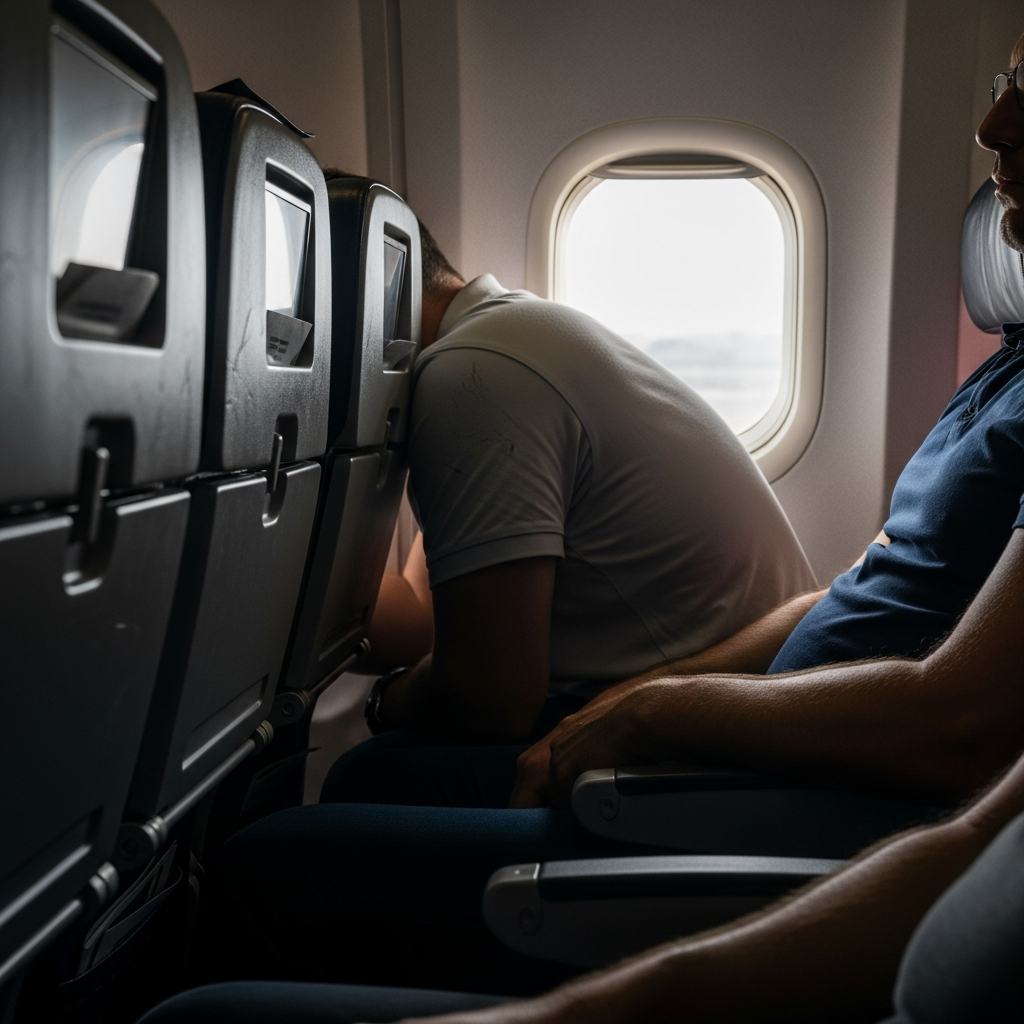
A photo doesn’t need a caption to pick a fight online. But one did anyway.
On Dec. 17, 2025, an X user posted an image from an airplane window seat that, to many viewers, looked like a cramped travel horror story: the poster’s body pressed hard toward the window, with the suggestion that a seatmate’s size and spillover had left them “squished.” The post rocketed past 11 million views, according to reporting by People, and with it came the familiar thunderclap of modern air travel discourse: Who’s at fault—passengers, or the system that packs them in?
If the internet has a national pastime, it might be litigating airplane etiquette in the comments. But beneath the snark and moral certainty, this particular flare-up points to something more durable than a single uncomfortable flight: the economics of seat size, the design choices airlines keep making, and the way those choices turn strangers into adversaries at 35,000 feet.
A Photo, a Pile-On, and a Pattern
The People report describes a comment section split between sympathy for the window-seat passenger and criticism of the framing—some readers argued it was unfair to blame a “plus-size” traveler for a problem created by airline seating dimensions. That split is the story.
This is not just “airplane drama.” It’s a recurring cycle:
- A cramped-seat incident goes viral.
- Commenters pick sides—recline vs. no recline, “personal responsibility” vs. “corporate greed,” window-seat rights vs. middle-seat misery.
- The deeper issue—shrinking space in economy cabins—briefly becomes the villain.
- The news cycle moves on, while the seats stay the same size (or smaller).
The viral photo was a match in a room already filled with gasoline: travelers are stressed, flights are full, and the margin for comfort in economy is so thin that basic body geometry becomes a conflict.
The Seat-Size Squeeze: When Comfort Becomes a Premium Product
The loudest argument under the viral post wasn’t really about one passenger’s body. It was about airlines selling scarcity—and then acting surprised when customers fight over it.
A Yahoo Creators piece about the latest wave of “recline wars” distilled the frustration into a line that has become internet scripture:
“The airline has essentially sold the same six inches of space twice,” one commenter wrote, pointing to how airlines have reduced seat pitch while keeping seat recline.
That’s the structural problem in plain English. Airlines can preserve the feature (recline) while quietly shaving the space that makes it tolerable. The result is a cabin where one person’s “normal” behavior—reclining a seat—can feel like an act of aggression to the person behind them.
The same logic applies to width and shoulder room. When seats are tight enough, a jacket sleeve becomes a boundary dispute. A hip becomes a debate. An armrest becomes a treaty line.
And because airlines have turned space into an upsell—extra-legroom rows, premium economy, business class, seat-selection fees—comfort becomes a commodity, not a baseline expectation. That doesn’t just change the cabin. It changes people’s attitudes. When passengers feel they’ve paid for a “right” to comfort, they may be less willing to compromise—especially when the system offers compromise only as an add-on.
Why These Fights Keep Going Viral (and Why They Feel So Personal)
Airplane conflicts are uniquely viral because they’re uniquely relatable. Nearly everyone has a “flight from hell” story, and the cabin is a perfect stage for public judgment: a narrow space, no exit, and a captive audience.
But there’s a deeper psychological trap: airline discomfort is experienced as interpersonal harm, even when it’s structural.
A BBC report on seat recline etiquette quoted Prof. Jim Salzman of UCLA, who framed the issue bluntly: the core problem is how airlines cram seats onto planes, giving passengers less space than in the past. And crucially, he noted that airlines can “pass on the anger and frustration of cramped seating to passengers who blame each other.”
That’s the business magic trick: turn a design constraint into a social conflict. If two passengers argue over inches, they’re not arguing with the airline.
The viral “squished into the window” photo hit this nerve perfectly. It looks like a dispute between two people. It’s also a reminder that economy seating is now so tight that normal human variation—height, weight, broad shoulders, medical needs—can become a flashpoint.
Recline Wars, Armrest Wars, and the New Etiquette Arms Race
Air travel etiquette used to be about politeness. Now it’s about micro-negotiations of space.
Reclining: A Feature That Creates a Fight
The recline debate is the internet’s favorite aviation trial. One side argues: “I paid for a reclining seat, I can recline.” The other side counters: “You’re stealing my already tiny space.”
Both can be right. That’s the point. The design is the conflict.
Some airlines have experimented with changes. Newsweek reported that WestJet backtracked after a plan to change economy seats sparked backlash—an example of how even small shifts in seat design can trigger fierce public reaction. When airlines tinker with recline, passengers interpret it as either a loss of rights or a long-overdue mercy.
Armrests: The Middle Seat’s Only Inheritance
If there’s one etiquette rule with near-universal support, it’s armrest protocol—at least among people who have ever been sentenced to the middle seat.
Consumer Reports, citing etiquette expert Diane Gottsman of The Protocol School of Texas, lays out the simple rule:
The person in the middle seat gets access to both armrests because it’s the least comfortable seat.
This is etiquette as compensation: the middle seat gets the armrests as a kind of humanitarian aid package. Not because the middle-seat passenger is more important—but because the window and aisle passengers already have something: a wall to lean on, or an escape route.
In practice, though, armrests are now less “rests” and more border walls. When seats shrink and flights fill, passengers treat armrests like property lines—sometimes with the intensity of a land dispute.
The ‘People Problem’ Story Is Tempting—and Usually Wrong
The viral photo’s framing—one passenger “squished” by a larger seatmate—invites an easy narrative: This is about body size and personal responsibility. That narrative spreads fast because it’s simple and emotionally satisfying.
It’s also incomplete.
Yes, passengers have responsibilities: to respect boundaries, to avoid taking more than their share of space when possible, and to handle conflicts without cruelty. But the larger truth is that airline seats are increasingly designed for an abstract “average” body that doesn’t reflect real human diversity.
When a cabin is built with minimal tolerance for variation, the system guarantees conflict. It turns normal bodies into “problems” and encourages the public to rank which bodies are acceptable.
That’s why the more useful framing is the one that surfaced repeatedly in the broader debate: this isn’t a people problem, it’s a seat-size profit problem.
Airlines can—and do—choose layouts. They can prioritize capacity, revenue, and segmentation over comfort, then sell comfort back to passengers in tiers. The result is a cabin that feels less like public transportation and more like a social experiment in scarcity.
Practical Policy Context: What Could Actually Change?
The debate tends to stall out at moral judgments—don’t recline, do recline, buy two seats, don’t shame people, be considerate, etc. But policy and design choices are the levers that matter.
Here are the pressure points that the viral moment puts back on the table:
1) Minimum Seat Standards
The recurring public question is whether there should be enforceable minimums for seat pitch and width in economy. Travelers often assume there are. In practice, the industry has wide latitude, and changes tend to be driven by market forces and public backlash rather than a clear, universally understood standard.
2) Transparent Seat Dimensions at Purchase
Imagine buying a concert ticket without knowing whether your seat has a backrest. That’s how many travelers feel about airline seating. The industry could reduce conflict by making seat width, pitch, and recline range clearly visible at checkout—not buried in aircraft diagrams or third-party forums.
3) Rethinking Recline
Recline is the feature that keeps generating viral fights. Airlines can:
- limit recline in standard economy,
- redesign seats to “slide forward” rather than crush the row behind,
- or create clearer cabin zones where recline expectations are predictable.
The WestJet backlash reported by Newsweek shows the risk: mess with recline and you’ll hear about it. But the alternative is the status quo—passengers policing each other.
4) Better Conflict Resolution Onboard
Flight attendants are not referees, but they are often forced into that role. Airlines could provide clearer rules and empower crews with consistent policies so conflicts don’t become personality-based judgments.
A Survival Guide for the Rest of Us: Etiquette That Actually Works
Viral posts make it seem like every flight is a cage match. Most aren’t. But the cabin is tight enough that small choices matter.
Here’s what experts and common sense tend to agree on—without turning your row into a courtroom:
Start with communication, not commentary
A simple, quiet: “Hey—could we adjust a bit? I’m getting squeezed here,” is more effective than silent resentment. It’s also more humane than posting a stranger’s body to the internet.
Honor the middle-seat armrests
Consumer Reports’ guidance is clear: middle seat gets both armrests. If they’re not using one, ask politely. Don’t just annex it.
Recline with awareness
If you recline, do it slowly—especially during meal service—and consider giving a heads-up if the person behind you is tall or working on a laptop. You’re allowed to recline; you’re not required to do it like a guillotine.
Don’t make strangers solve airline economics
If you need extra space for comfort or medical reasons, plan ahead when possible—seat selection, early boarding, speaking with the airline. And if you’re the person feeling cramped, aim your frustration upward at the system, not downward at the nearest human.
The Real Headline: We’re Fighting Over Inches Because Airlines Sell Inches
The “squished into the window” photo went viral because it’s a perfect symbol of modern economy flying: too little space, too many expectations, and a business model that profits from discomfort.
The internet will keep arguing about who deserves what—who should recline, who should buy an extra seat, who should yield the armrest, who should have booked earlier. Those debates are not meaningless; etiquette matters when people are packed together.
But the viral photo’s most important lesson is also its most inconvenient one: the cabin is designed to make conflict inevitable. When airlines reduce the margin for human comfort, passengers become enforcers of invisible boundaries—and social media becomes the courtroom.
In 2025, the seat war isn’t really between passengers. It’s between passengers and a system that keeps shrinking the commons, then acting shocked when the commons gets crowded.
The Northstar Ledger will continue tracking consumer travel policies, airline cabin design changes, and the real-world economics behind the internet’s favorite in-flight fights.