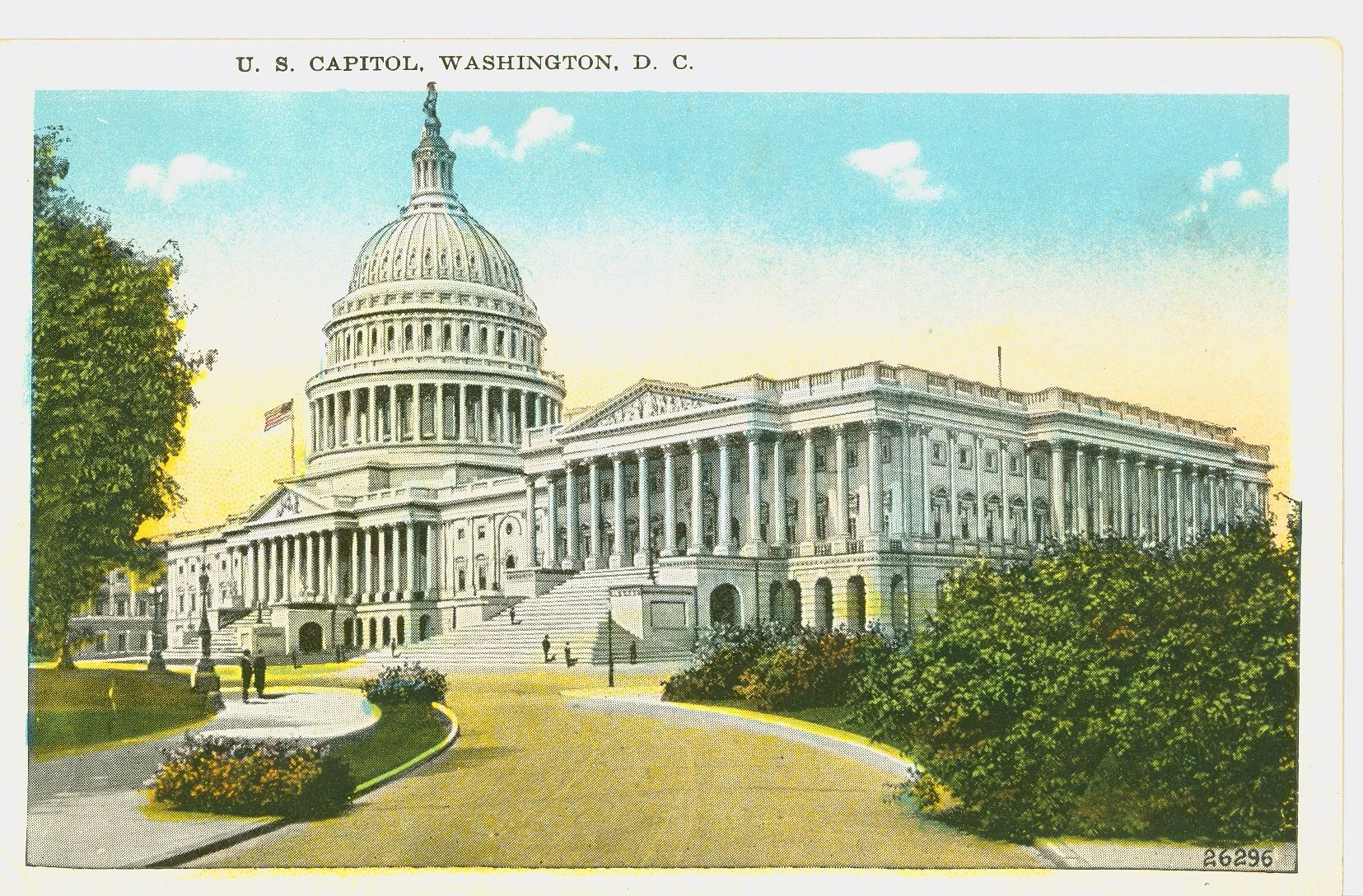
America 250 Is Becoming a Test of Whether the Country Still Knows How to Celebrate Itself
There are a lot of ways to mark 250 years of American independence. You can do it with fireworks, pageantry, and a little civic gratitude. You can do it with parades, family cookouts, historical reenactments, and the kind of speeches that remind people why a country was worth founding in the first place. Or, if you are one of our modern cultural institutions, you can turn the whole thing into a seminar on national failure, make everyone sit in the back row, and call the result “nuance.”
That is the fight now taking shape around America 250.
President Donald Trump has made the semiquincentennial a centerpiece of his political calendar, treating the anniversary not as a dusty historical milestone but as a national identity moment. On July 4, AP reported that Trump mixed patriotic rhetoric with partisan edge while commemorating the 250th anniversary of American independence, calling it “one of the most joyous and glorious milestones of all time.” Reuters likewise noted that he used the celebration to rail against communism and cast the moment as a reaffirmation of American strength. In Washington and New York, the public pageantry was unmistakable: fireworks, tall ships, military displays, citizenship ceremonies, and a familiar Trumpian insistence that America should be admired first and analyzed second.
That instinct is not entirely wrong.
A country that cannot celebrate its own founding starts to lose the habit of self-respect. And once self-respect goes, public life gets very weird very fast. Every national ritual becomes an interrogation. Every monument needs a disclaimer. Every institution decides that the safest way to sound enlightened is to say the nation’s best achievements are morally suspect unless accompanied by a full-length confession.
But America 250 is not only a pageant. It is also a battlefield over memory.
The Smithsonian Fight Is About More Than One Museum
The core of the controversy is the Smithsonian, which has become the most visible symbol of the broader argument over how America should tell its own story. In March, NPR reported that Trump signed an executive order titled “Restoring Truth and Sanity to American History,” directing Vice President JD Vance and other officials to work toward removing what the order described as “divisive, race-centered ideology” from Smithsonian museums, research centers, and the National Zoo. PBS later reported that the White House pressed the Smithsonian for detailed plans and exhibit materials tied to America’s 250th birthday, warning that federal funding could be at stake if the institution did not provide the information requested.
The Smithsonian, to be clear, is not some minor office tucked away in a basement. It is a cornerstone of American culture, operating 21 museums and a zoo that draw millions of people and shape how schoolchildren, tourists, and citizens understand the country. It also sits in a peculiar public-private position: not a federal agency in the ordinary sense, but deeply dependent on Congress and therefore inevitably vulnerable when elected officials decide to lean on it.
That makes this more than a bureaucratic skirmish. It is a constitutional-style question about soft power. Who gets to narrate America? The professionals who curate the exhibits, or the elected government that funds the place? And if the answer is “both,” what happens when those two sides no longer share a definition of the national story?
The left’s reflex is to describe Trump’s pressure campaign as censorship. That is not a frivolous concern. Cultural institutions should not be turned into obedient campaign props. But the opposite mistake is just as common: pretending that every challenge to a museum’s framing is an attack on truth itself. That is too easy. Museums are not holy relics. They are institutions built by human beings, edited by human beings, and interpreted through human beings. They are not outside politics; they are part of it. They always have been.
And here is the uncomfortable part for the institution class: once a museum begins to present history primarily as a moral ledger of oppression, it should not act surprised when the public asks whether the ledger has become the exhibit.
Patriotic History Is Not the Same Thing as Fake History
The strongest version of Trump’s argument is not that America was perfect. Nobody serious believes that. The strongest version is that a nation can acknowledge its sins without turning those sins into the whole story.
Reuters, in a detailed July 3 report, described how America 250 has sharpened debate over whether the country’s story should be told as a celebration of founding ideals and national achievement, or as a more complicated account that includes slavery, Indigenous dispossession, immigration, exclusion, and the struggle of marginalized groups to secure the rights promised in the founding documents. That is the real tension, and it is not a silly one.
The question is whether complexity has become a euphemism for self-contempt.
There is a difference between teaching that American history includes moral failure and teaching that American history is nothing but moral failure. The first is scholarship. The second is ideology wearing an academic blazer.
You can see why Trump’s allies think they have a case. They look at the steady accumulation of museum language, campus rhetoric, and heritage programming and conclude that the country’s civic institutions have drifted toward a posture that is more interested in indictment than inheritance. They are not entirely hallucinating. There really has been, for years, a tendency in elite institutions to treat patriotism as a suspect emotion unless it is carefully diluted with embarrassment.
That becomes a problem in a semiquincentennial year. A 250th anniversary is not the time to forget the nation’s imperfections. It is the time to place those imperfections in scale. The United States is not a toddler pretending to be an adult. It is an old, complicated republic that has managed, despite civil war, economic upheaval, foreign conflict, and recurring self-doubt, to keep building, absorbing, and renewing itself. That deserves something a little more serious than a permanent guilt ritual.
The Trouble With Institutional Moral Superiority
This is where the Smithsonian controversy gets interesting.
A healthy cultural institution should be brave enough to tell the whole truth. But it should also resist the fashionable vice of moral grandstanding. In the current climate, some institutions appear to believe that if they foreground every injustice, they have achieved honesty, even if they omit the deeper American paradox: the same country that tolerated slavery also produced the constitutional vocabulary that later made abolition, civil rights, and equal citizenship possible.
That paradox is the story. Not just the wound, but the repair. Not just the crime, but the argument against the crime.
If the Smithsonian becomes a place where the nation is always being put on trial and never allowed to present a defense, then Trump’s complaint will resonate far beyond his own voters. Regular Americans, the ones who do not spend their days reading mission statements from cultural nonprofits, tend to have an instinctive sense that a country should be able to honor itself without becoming childish about it.
This is why the issue is politically potent. Trump is not merely picking a fight with a museum. He is tapping into a broader public fatigue with elite institutions that sound less like guardians of heritage and more like therapists who have decided the patient is permanently broken.
There is a reason the patriotic note has such power in an election cycle and in an anniversary year. People want to be reminded that they belong to something larger than the latest grievance trend. They want history that is honest, yes, but also usable. They want to walk into a museum and leave feeling informed, not diminished.
That does not mean sanitized history. It means proportion.
America 250 Needs Confidence, Not Constipation
The official celebrations of America 250 will no doubt continue to unfold with all the expected pomp. There will be speeches, flyovers, commemorations, and the usual parade of officials trying to sound as if they personally invented the Constitution. But the deeper fight is about tone.
Tone matters because tone tells people whether a country is worth loving.
Trump’s pitch is, in essence, that America should enter its 250th year with its shoulders back. There is a political calculation in that, naturally, but there is also a cultural truth. A nation cannot endure if every generation is taught to regard it as a fraud. It can be improved only if it is first regarded as worth improving.
The institutional counterargument is that pride without critique is a lie. Fair enough. But critique without pride becomes another kind of lie: the lie that the American experiment is simply a string of failures that happened to produce a rich country by accident.
The better answer is older than the current fight. It is the idea that America’s greatness lies precisely in the fact that its ideals are higher than its practice, and its practice has repeatedly, painfully, moved toward the ideals rather than away from them. That is a proud story. It is also a serious one.
That is what America 250 ought to celebrate.
Not innocence. Not self-flagellation. Not a museum of apologies.
A republic that has survived long enough to argue with itself in public, and still remain worth arguing over.
Sources
- Reuters, “As America turns 250, museums and parks fight to preserve the country’s troubled history” — https://www.reuters.com/legal/government/america-turns-250-museums-parks-fight-preserve-countrys-troubled-history-2026-07-03
- Reuters, “Trump extols America, rails at communism in US 250th celebration” — https://www.reuters.com/world/us/trump-extols-america-rails-communism-us-250th-celebration-2026-07-04
- AP News, “Trump mixes patriotism with partisanship as he celebrates America’s ‘joyous’ 250th anniversary” — https://apnews.com/article/america-250-weekend-heat-united-states-1eeaf21e91ed583595611251649db93e
- NPR, “Trump executive order seeks to ‘restore’ American history through Smithsonian overhaul” — https://www.npr.org/2025/03/27/nx-s1-5342914/smithsonian-president-trump-executive-order
- PBS NewsHour / Associated Press, “Smithsonian pressured to show Trump its plans for exhibits for America’s 250th birthday” — https://www.pbs.org/newshour/politics/smithsonian-faces-a-deadline-to-show-trump-its-plans-for-exhibits-for-americas-250th-birthday