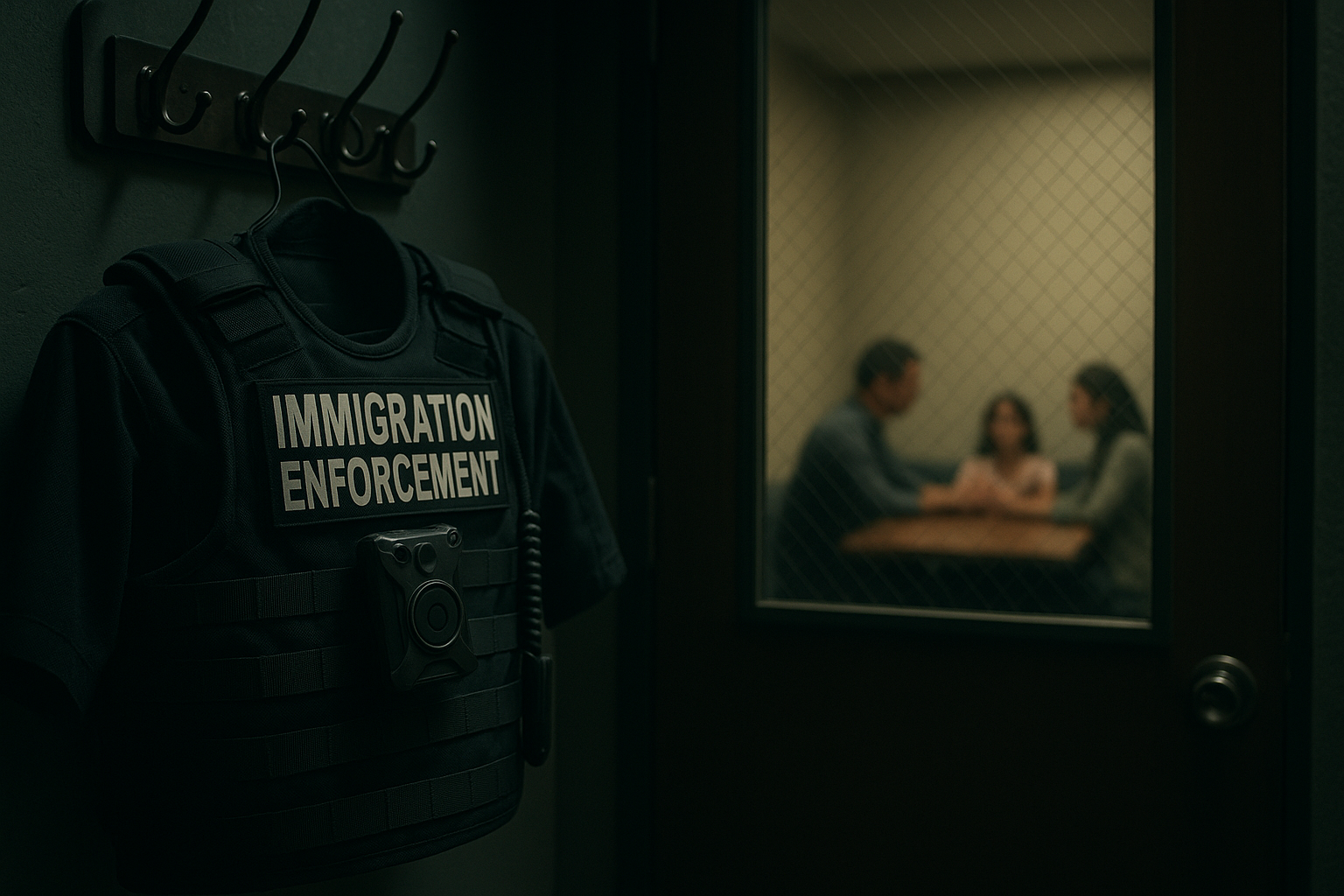
The Story Nobody Is Covering
When Americans think about the Trump administration's immigration agenda in 2026, the images that come to mind are dramatic: masked ICE agents in urban neighborhoods, deportation flights, protests outside detention centers, and politicians trading accusations on cable news.
That is the visible part of the story. The invisible part is the bureaucratic machinery that is quietly grinding down legal immigration in every category — family reunification, employment-based visas, asylum processing, and the Diversity Visa Lottery. And the cumulative effect of that invisible machinery may do more long-term damage to the country than any single raid.
According to reporting from Forbes, immigration attorneys, and policy analysts, the Trump administration is on track to reduce legal immigration to historic lows by the end of 2026 — and the planned trajectory for 2027 and 2028 is even steeper. American citizens waiting to be reunited with their spouses, children, and parents are bearing the brunt of it.
The Public Charge Rule That Changed Everything
The single biggest shift came in July 2026, when the Department of Homeland Security published its final rule revising the "public charge" framework for permanent residency applications.
For decades, U.S. immigration law has included a provision allowing officials to deny a green card if an applicant is likely to become primarily dependent on public benefits. The 2022 version of the rule, drafted under the Biden administration, narrowed the criteria significantly — focusing on direct receipt of specific cash assistance programs.
The Trump-era final rule rescinded that framework entirely and replaced it with a much broader standard. Officials are now granted wider discretion to deny permanent residence based on speculation about future earnings, potential future benefits usage, and family circumstances. In practice, this means a U.S. citizen sponsoring a spouse or parent can be denied on the basis of what an immigration officer thinks might happen with that person's employment trajectory — not on what has actually occurred.
For American families, the impact is immediate and severe. Family-based immigration applicants who previously had clear approval pathways now face multi-year delays and discretionary denials with no meaningful judicial review.
The Diversity Lottery Quiet Cancellation
In a move that received almost no national press coverage, the State Department announced that Diversity Visa Lottery selectees who do not receive their visas or status adjustments by September 30, 2026 will derive no further benefit from their DV-2026 registration.
The Diversity Visa program was created by Congress in 1990 to encourage immigration from countries with historically low rates of immigration to the United States. It is one of the few merit-based, lottery-driven pathways into the country and has produced hundreds of thousands of legal immigrants over three decades, many of whom went on to become naturalized citizens and small business owners.
The September 30 cutoff means that tens of thousands of selectees who completed their initial applications, paid the required fees, and waited through the multi-year processing pipeline are now being told their selection has expired. The administration has framed this as routine administrative cleanup. For the people affected, it is the difference between a life in America and a return to indefinite waiting.
The Family Reunification Backlog Disaster
Behind the policy headlines is a quieter crisis: the family reunification backlog has effectively collapsed as a functioning system.
U.S. citizens sponsoring immediate relatives — spouses, minor children, and parents — are now facing multi-year waits that exceed the natural lifespan of some of the relationships they are trying to reunite. Parents in their 80s are sponsoring children who will arrive in their 90s, if at all. Spouses separated by bureaucratic processing pipelines are missing the formative years of their children's lives.
This is not a side effect of the immigration debate. It is a direct consequence of the administration's decision to redirect State Department and USCIS resources away from family-based visa processing toward enforcement activities. When you shift the federal immigration bureaucracy from processing applications to running deportation operations, the families waiting in line pay the price.
The Economic Cost Nobody Will Admit
Immigration economists across the political spectrum have warned for years that aggressive cuts to legal immigration produce measurable economic damage within a decade. The administration's own internal estimates, according to sources cited in multiple policy analyses, project significant GDP contraction in the 2030s as a direct consequence of current legal immigration restrictions.
The mechanism is straightforward. Legal immigrants are disproportionately entrepreneurs, skilled workers, and family members who support the labor force participation of other immigrants. When you throttle their inflow, you throttle the demographic and economic dynamism they bring with them.
This is not a moral argument. It is a math argument. And the math does not care about the politics of the moment.
What Both Sides Are Missing
The political debate around immigration in 2026 has collapsed into a binary argument about whether the administration's enforcement agenda is justified. That framing misses the more important question: what kind of immigration system does a healthy, functioning republic actually need?
There is a defensible case for stricter enforcement, for tighter visa security, and for prioritizing merit-based admissions. There is also a defensible case for humane treatment of long-resident undocumented immigrants and for maintaining the family reunification principles that have anchored U.S. immigration law for generations.
What there is no defensible case for is a system that quietly crushes legal applicants who followed every rule, waited years in line, paid every fee, and are now being denied on discretionary speculation about futures that may never come. That is not immigration policy. That is bureaucratic cruelty dressed up in the language of national security.
The administration's enforcement theater gets the headlines. The legal immigration destruction is happening in the footnotes. And the people most affected — American families waiting to be reunited with their own — are the ones least represented in the political conversation.
Sources: Forbes (Stuart Anderson reporting on legal immigration restrictions), DHS final rule on public charge (July 2026), State Department Diversity Visa Lottery announcements, congressional immigration policy analyses, immigration attorney commentary.